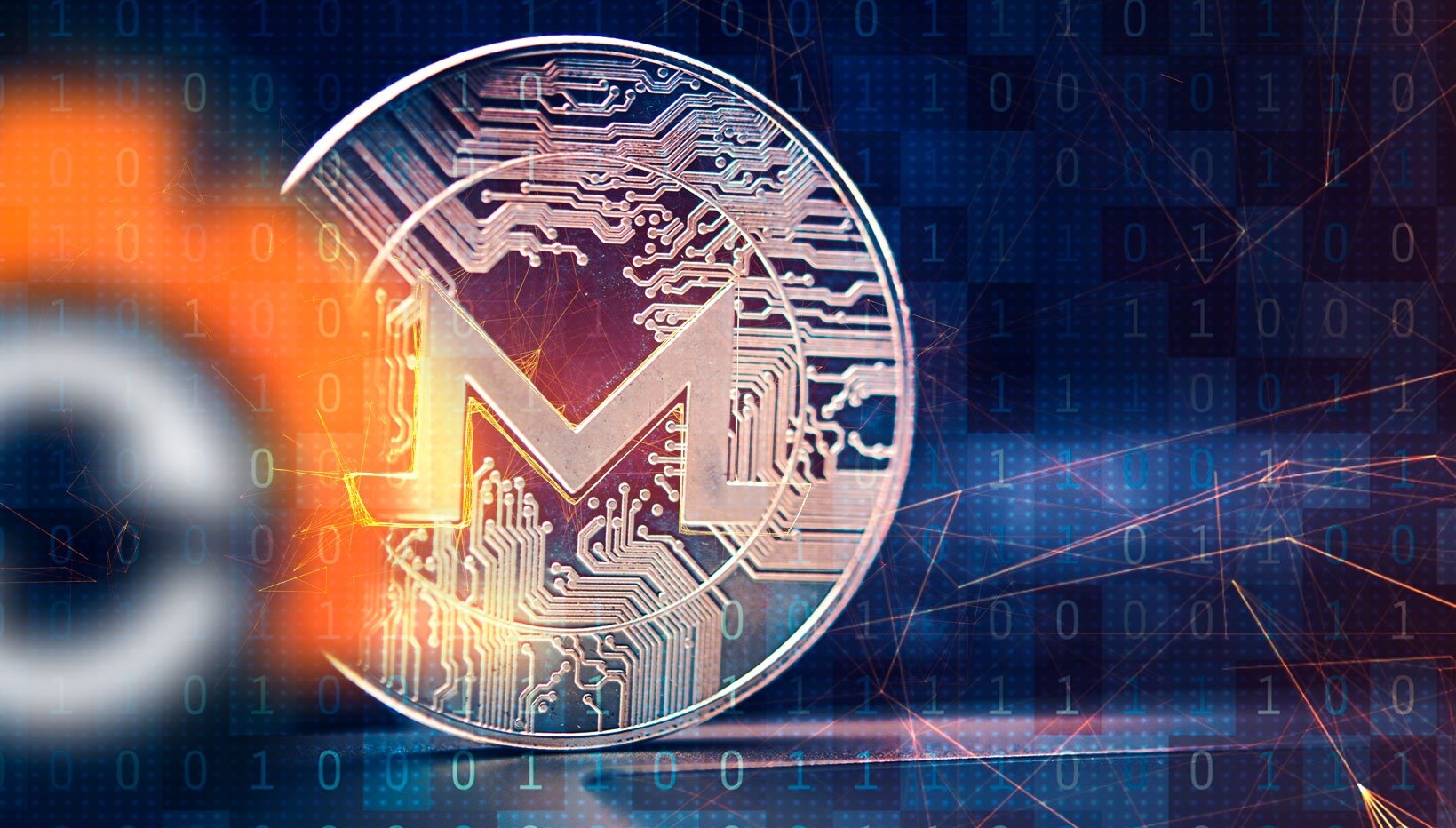
More recently, the MINE.exchange service has the opportunity to buy and sell the Monero (XMR) cryptocurrency. In our new review, we will analyze the main features of this cryptocurrency.
What is Monero?
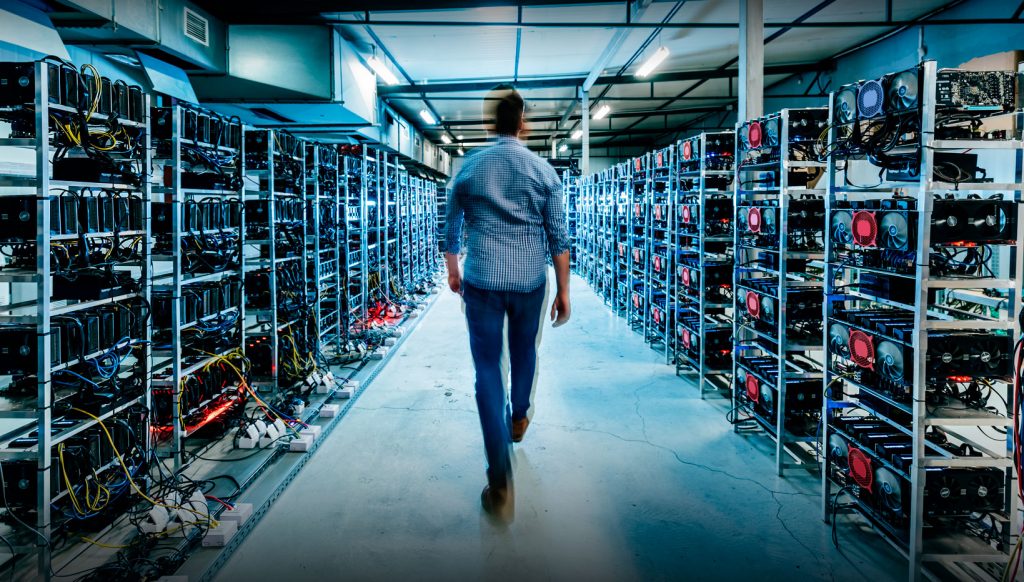
It is an open-source digital token created in 2014. Although it is similar to bitcoin in many ways, Monero still has stronger privacy features, which is why it is so beloved by dark web users. Even the underlying blockchain hides the identity of the trader and the amount of the transaction. Monero is considered one of the top 30 coins with a market cap of over $2 billion that uses the Proof-of-Work (PoW) consensus mechanism. Its developers are trying their best to maintain decentralization, allowing even amateur miners to participate in the mining process. Therefore, Monero is the only cryptocurrency that can be mined at home on a work computer. Unlike the same bitcoin, the extraction of which requires the purchase of expensive equipment: powerful video cards, and a processor + to solve the main problem of a large amount of power consumption, everything is much easier with Monero.
What is XMR mining?
XMR mining is the process of verifying transactions on the Monero blockchain. Miners are rewarded with XMR coins, with new blocks being mined every 2 minutes. Usually, coins have a hard-limited supply. For example, Bitcoin has a supply of 21 million coins. Once BTC reaches this hard limit, miners will no longer receive new coins for creating new blocks. They will only receive the fees associated with each transaction. Monero operates on a different principle. Once the circulation of this token reaches the 18 million mark, miners will receive a fixed reward of 0.6 XMR indefinitely. This is called tail emission and is meant to motivate miners. You can mine Monero on any operating system using the hardware you have at your disposal. However, there are different ways to mine this coin.
Solo mining. When mining solo, you can keep the entire reward for yourself. However, you will receive less frequent rewards compared to mining pools.
Mining pools. Mining pools charge a maintenance fee of 0-2% and the reward is shared among all participants. In addition, the software you use for mining may also be subject to a small fee. However, in this case, you will be rewarded more often.
P2Pool. This method offers the best of both worlds – solo mining and pool mining. This gives you frequent payouts like pool mining without trusting a centralized pool.
Where to begin?
1. Download and set up a wallet that can support Monero. These can be MyMonero, Edge, Cake Wallet, Monero GUI0, Trezor, etc.
2. Install the mining software. Most users prefer to use XMRig or CSminer. You can download the software from its website and extract the zip files.
3. Choose a convenient mining method: solo, pool, or P2P. Most likely, you may not have enough powerful processors for independent mining, so at this stage, it is better to choose a command pool.
4. Create a config.json file. In XMRig, you need to create the file you need to start mining. In the search results, you can find many manuals on how to do this.
What should be considered before mining Monero?
While Monero is one of the most accessible cryptocurrencies you can mine, you still need to consider if it’s worth it. One way to do this is to test your profitability. To do this, you must take into account your mining hash rate, electricity costs, and pool maintenance fees and compare them with your reward. You can also use the XMR mining profitability calculator to determine if it’s worth it. To optimize performance, you can increase the processing speed of your device. Mining is a game of speed: the faster you solve puzzles, the more rewards you can earn. Solo mining using only the CPU can be possible, but it can also be financially unprofitable, in which case joining a pool is your best option.
Monero Market Performance
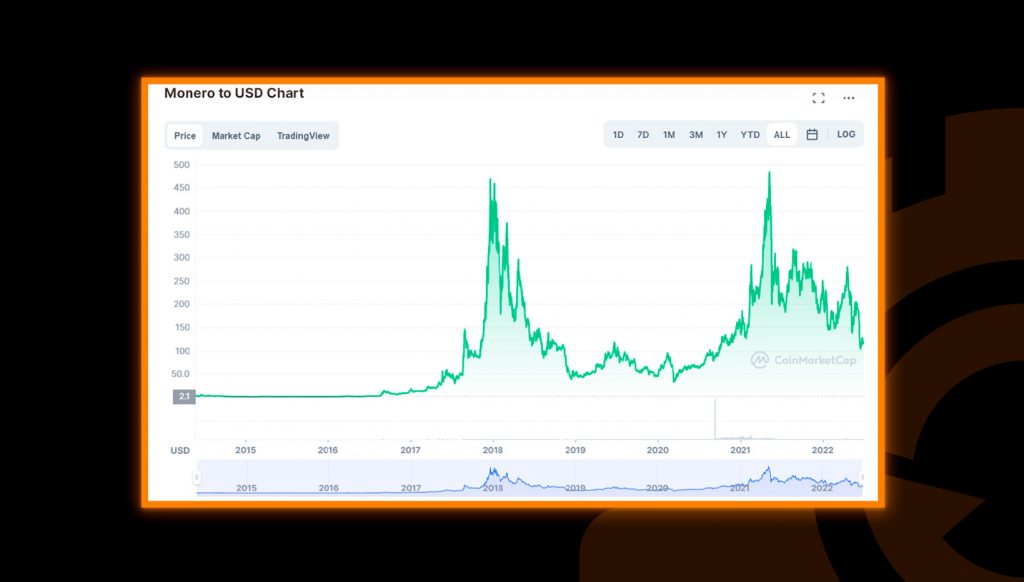
XMR today, like the entire crypto market, is on a decline in a “bearish grip”, however, if you track the dynamics over the entire period of Monero’s existence, the following interesting metrics can be noted. There are 2 steep peaks in the history of Monero: January 2018 and May 2021. Then XMR was close to the $500 mark, after which it rolled back to the rate of $35-40 per coin in 8-9 months and again rose to the peak. Based on the chart, you can see that now Monero is hovering around $100 (corresponding to the June 2018 recession level) and in the coming months the rate may fall even lower, but probably by the end of the year, the rate will stabilize and a neat rise to a new peak will begin. On a short-term basis, Monero has maintained a strong uptrend over the past few days despite a significant price drop. This activity is likely in preparation for an updаte scheduled for July 16th.
Summary
- Monero is an open-source digital token with enhanced privacy features.
- Once the circulation of Monero reaches 18 million, miners will receive a fixed reward of 0.6 XMR indefinitely.
- XMR tokens can be easily mined at home using conventional equipment.
- Before you start mining XMR, evaluate your resources and calculate profitability.
- XMR today, like the entire crypto market, is in decline, but there is an optimistic forecast for further stabilization before the end of the year.